
by Massimiliano Albanese
16 June – 20 October 2026
Imaginary creatures in book illustration.
From ancient books to modern fantasy.
Fictional creatures have inhabited the pages of books for centuries. The exhibition draws on a wide selection of 88 volumes held in the Library’s collections: manuscripts, incunabula, antique printed books and a number of publications dating up to the early 20th century. Within this chronological and material framework, the images on display document the enduring popularity of fantastical, monstrous and marvellous beings, tracing their presence in works that vary in era, technique and purpose. In these books, such creatures do not appear merely as curious ornaments or fantastical inventions, but as figures through which humanity has given form to that which eludes ordinary sight: myth, the heavens, the supernatural, evil, the wonders of nature, power, fear and moral tales.
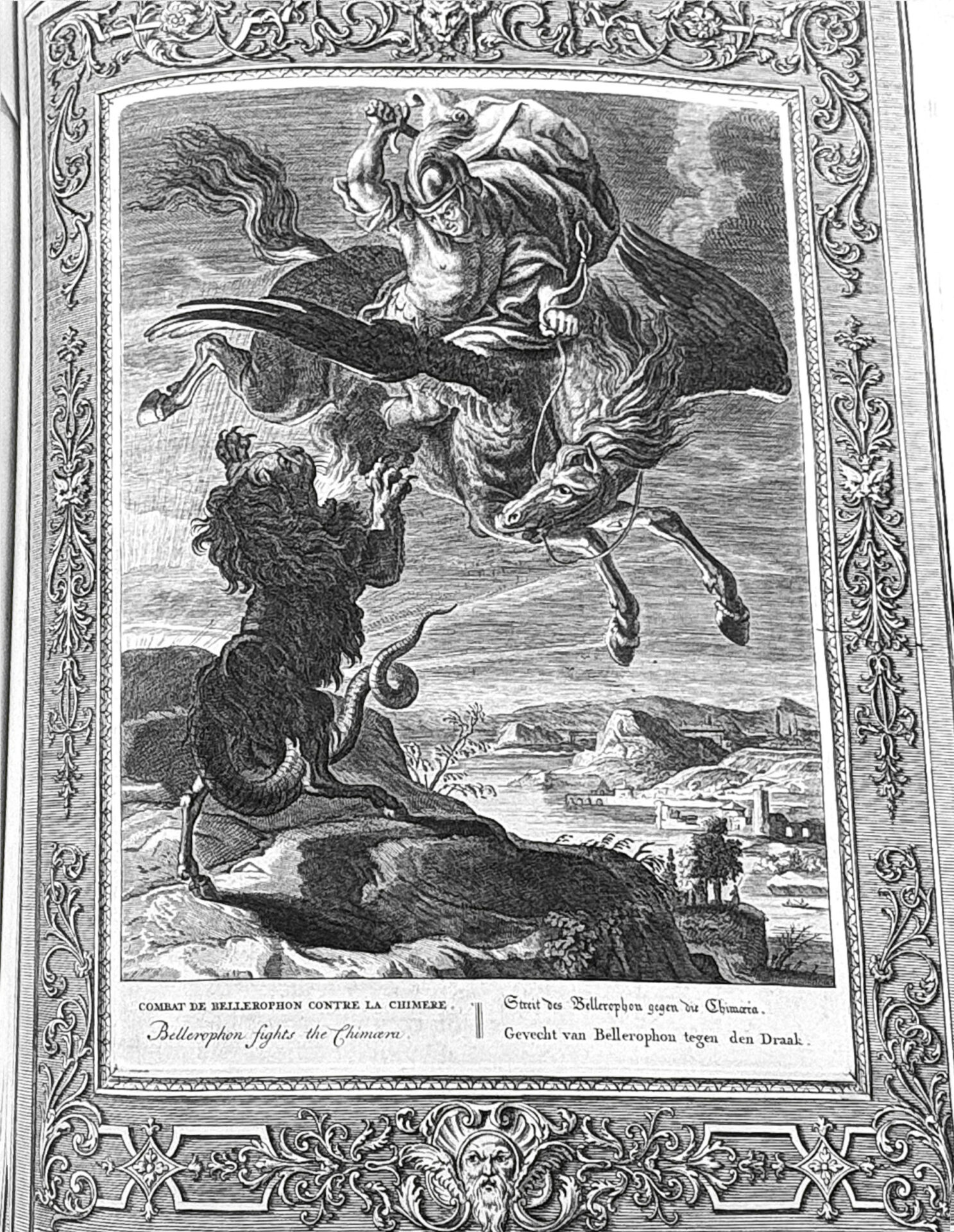
The exhibition therefore takes visitors on a journey through some of these figurative representations, tracing their evolution across various aspects of book culture. The journey begins with ancient mythology, that vast reservoir of the Western imagination, populated by fauns, centaurs, sirens, chimeras, sea monsters, figures from the Underworld and creatures capable of metamorphosis.
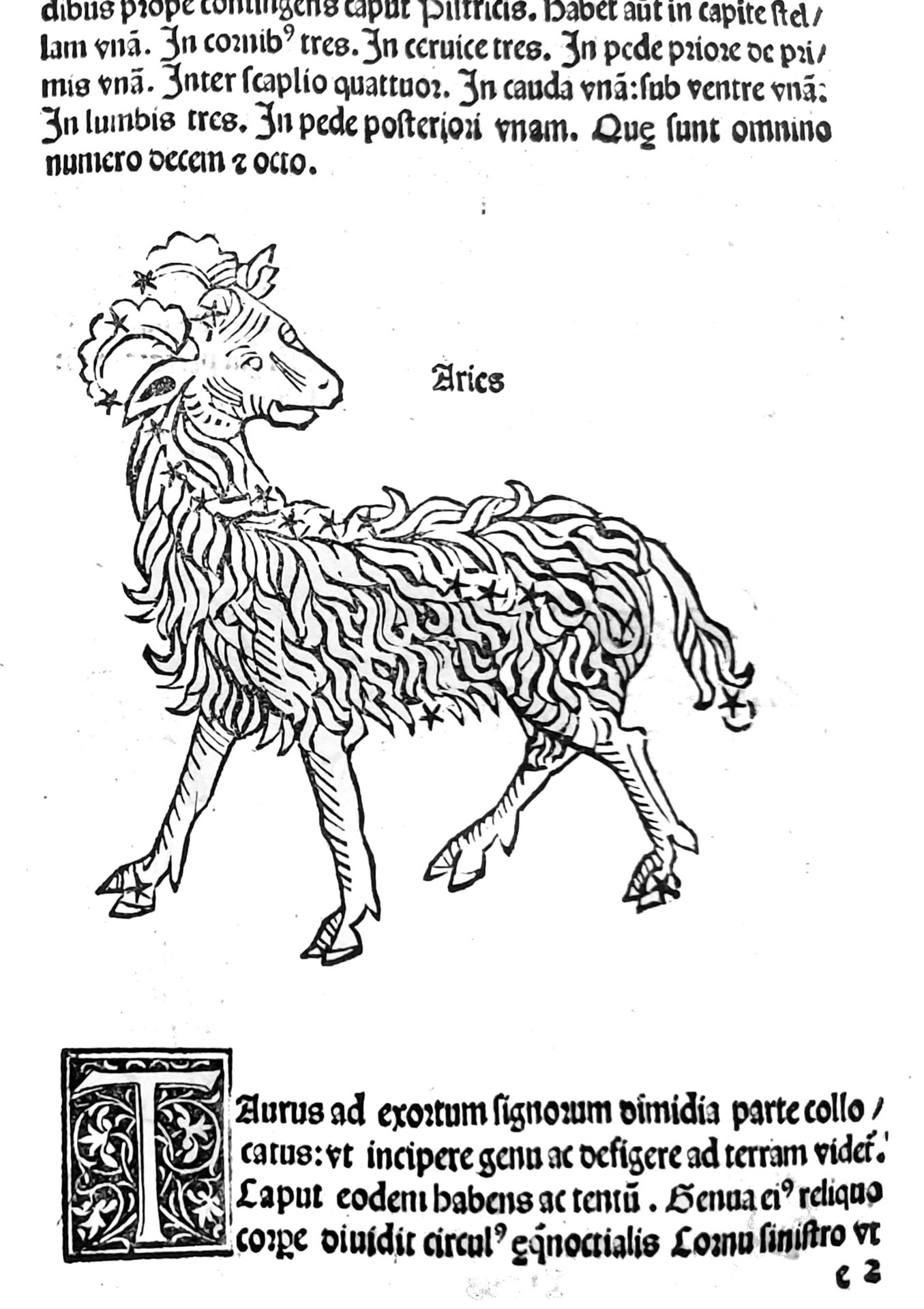
From this initial core, we move on to the constellations, the zodiac and the planets: many mythical characters and animals were in fact recognised in the figures of the sky, whilst the ancient pagan gods came to personify, in astrological imagination, the planets that bear their names. The mythical narrative is thus projected onto the firmament and becomes a sign, an influence, an image of time and destiny.
From the astrological realm, the exhibition then moves on to the religious and moral realm. Angels, demons, the serpent of Eden, apocalyptic visions, sabbaths and figures of the Antichrist demonstrate how book illustration has succeeded in bringing to life the conflict between good and evil, salvation and damnation, divine order and demonic subversion.

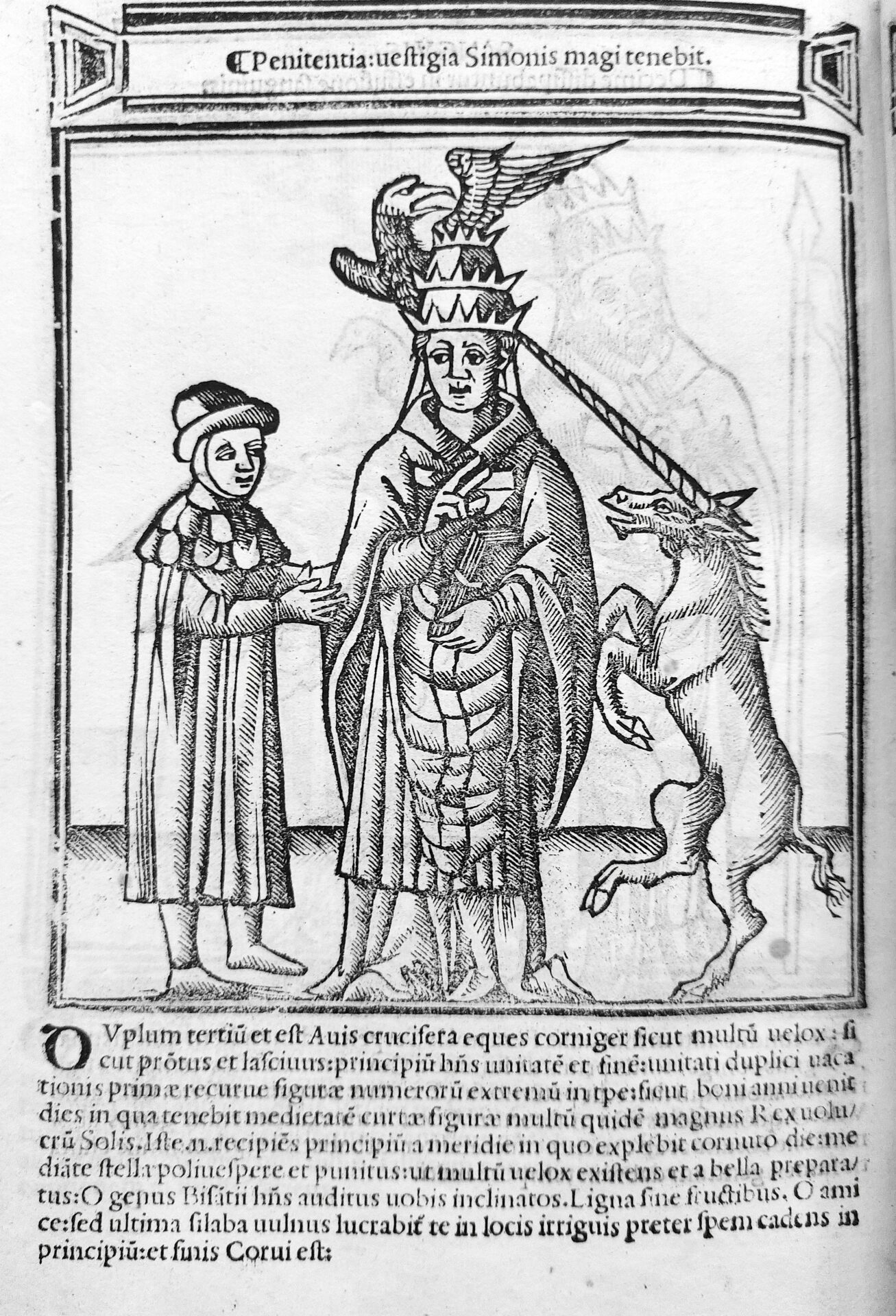
Alongside these themes is the section on symbols and allegories, dedicated to images in which the fantastical creature takes on the value of a sign, emblem or conceptual figure. The figurative prophecies of the Vaticinia de summis pontificibus, heraldry, personal emblems and moral allegories demonstrate how real or imaginary animals could become instruments of identification, warning, celebration, political legitimisation or interpretation of destiny.
A further section is devoted to the presence of the marvellous in scientific, natural history, medical and encyclopaedic works. Monstrous peoples, basilisks, dragons, hydras, sea monsters, anthropomorphic mandrakes, and rare or deformed animals bear witness to a body of knowledge in which observation, ancient tradition, scholarly authority and imagination often coexist within the same boundaries. What today seems fantastical might then have been accepted as possible, handed down as authoritative news or discussed as a wonder of nature.
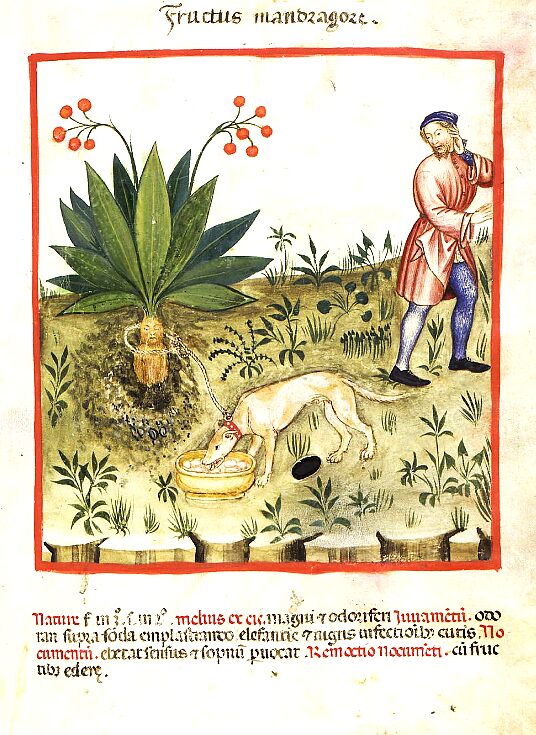

The exhibition continues with the animals and characters of fairy tales, moral tales and tales of wonder: giants, monstrous fairies, cunning animals, lunar creatures, fantastical journeys and moralising scenes. Here, the imagination rediscovers its most narrative and playful dimension, without losing its cognitive value: through the fable, the animal and the fantastical creature become a mirror of humanity, of its virtues and vices, of its intelligence and its illusions.
The exhibition concludes with a section dedicated to modern fantasy, featuring works by the contemporary artist Marco Sani. These are original illustrations, previously used as book cover art and now presented as standalone graphic works, often displayed alongside the books on which they originally appeared. In these works, a long tradition of fantastical creatures, monsters, hybrids and marvellous figures resurfaces through a new language: an imaginary world that stretches from ancient books to the narrative and visual forms of the contemporary era.
The exhibition therefore invites visitors to observe not only the creatures depicted, but also the ways in which they have been conceived, conveyed and transformed by the book. Each image is a threshold: it opens onto distant worlds, scholarly and popular traditions, beliefs, allegories and forms of knowledge that have populated the European imagination for centuries. To look at these creatures is to follow, page by page, the long history of what humans have feared, desired and recounted.